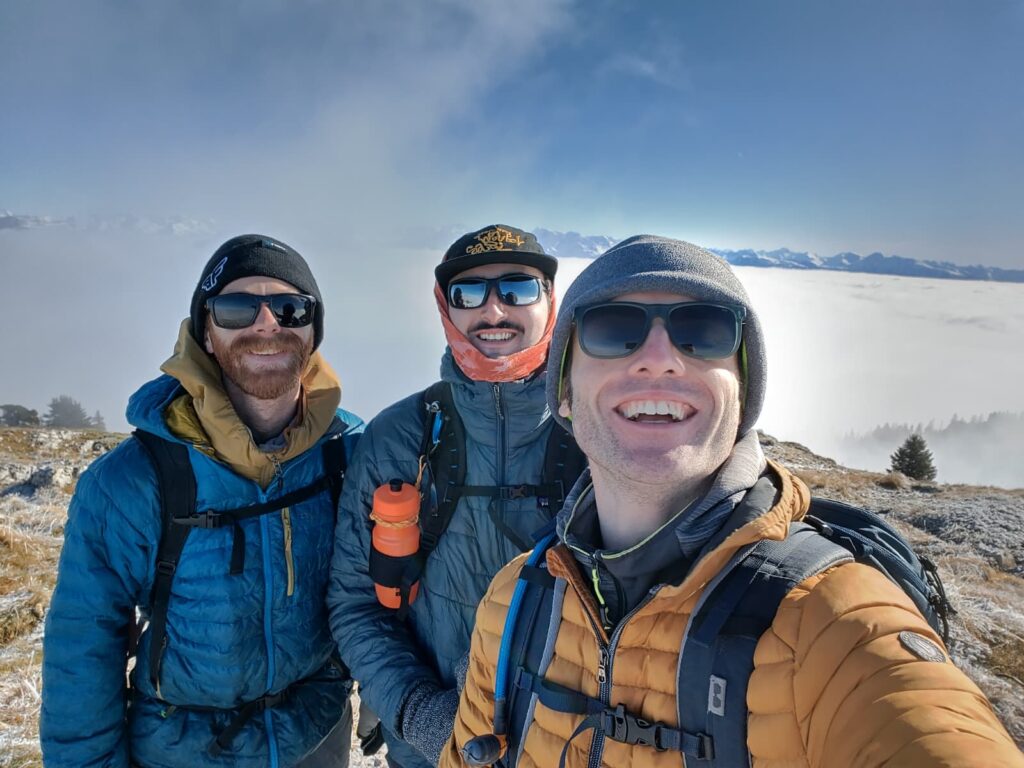
We three hikers set off at an exceptionally early hour considering our employment status. As with any good hike in the French alps the meeting point was given at the bakery. I arrived politely late to our 8:30 rendezvous after weaving through the rest of the world on their way to work. The winter inversion has started to set-in the Grésivaudan, but some hints of sun shone through, almost offsetting the sinking cold of the valley.
A quiche and a coffee for breakfast, and poulet-curry sandwiches to-go for Maxime and I. After many departures into the mountains in the Alps I’ve learned that the typical sugary bakery breakfast of croissants and pain au chocolat only get you the first few hundred meters up. I learned to embrace my American roots and have a proper breakfast before these sorties.
We set off in the always reliable car of the even more so Julien. Having recently broken my phone on a bike packing trip I declared my inutility to the organization of the trip and resigned myself to the backseat of the car and the outing. We arrived at the village of Mont St. Martin in sub-zero temperatures (Centigrade of course) for a not-so-alpine start. The two of them my guides today we started up in the autumnal quietness.
The three of us had done our master’s together, and Julien and I are longtime paragliding partners. I have, in a way, introduced the two of them to mountain activities, especially ski touring and some easy alpine climbs. Today, the roles were reversed, each of them well equipped for our small outing, we walked relaxed.
We reminisced our way up the old logging roads and reflected on our time together during the master’s. Maxime has just defended his PhD and is enjoying the wait for the start of his new postdoc, while I enjoy the in-between time of submission and defense. We waded through the thick piles of leaves and breathed easily the new winter air. The old Chartreusian forest naked of leaves allowed for us to see deep between the pines, giving us glimpses of where we are going. I will start looking for a postdoc soon, this much is clear to me. The thick blanket of leaves obscured the path, but this particular trail has been here long enough that its path is revealed through the holloway. We take turns throwing out names of our previous classmates and telling stories that we all know we have told before. We don’t mind.
We see a cabin in the woods, but find no distinct trail to it. Cutting across the gently sloped woods we stumble through the roots and leaves. The small bumps indicating this really is old forest. We find the cabin to be hardly more than three and a half walls with a roof. Initials and dates scratched across the insides tell that people have passed through. I file its existence away for later adventures.
Coming back to the trail, all of us note that the path is almost impossible to find once lost. I will start looking for a postdoc soon, it’s a way to keep moving forward. But the ancientness of the trail gives it away once close. We move up into the clouds, now only our immediate surroundings remain clear to us. I see Maxime and Julien as they lead me forward. It should be said that Julien is a sailor and is experienced in navigating. His path may seem to wonder to those outside, but he has a map. I always wonder where he got it. We cross paths with a hiker coming down. From his viewpoint above, the trail is obvious, small depressions and bumps in the path are seen for what they are: parts of the path. He warns us of the sun ahead.
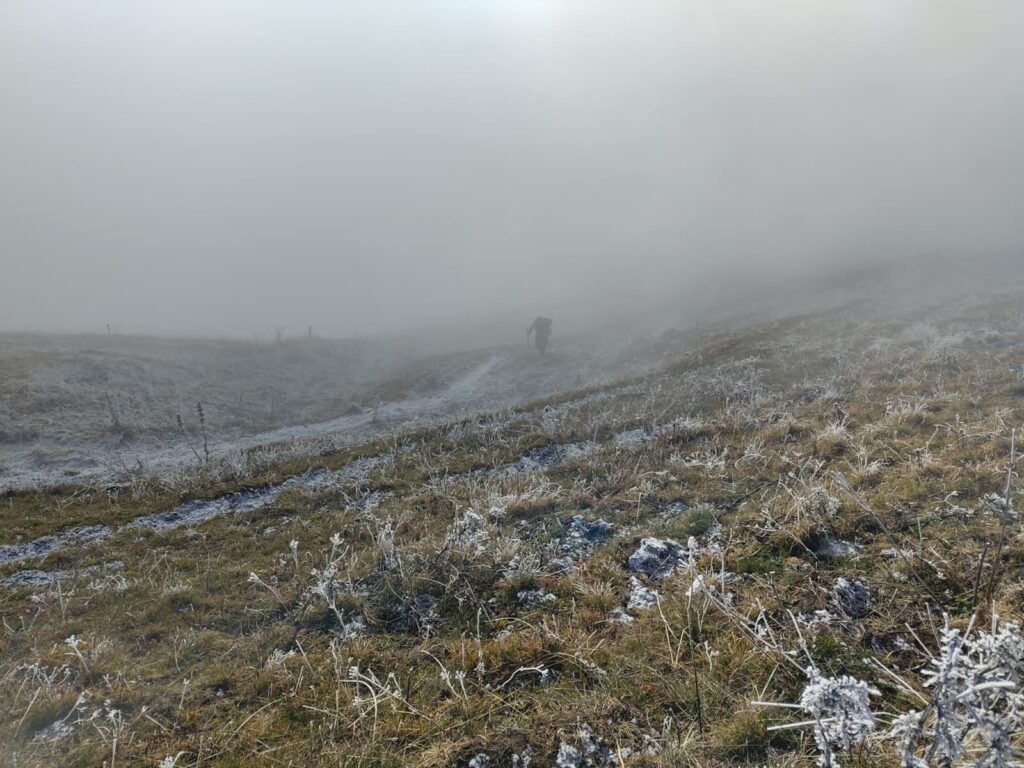
As we exit the forest at the tree line the clouds seem to agree that this is their limit too. We pierce into some clarity and enjoy our private sun above the clouds. But it’s not long until the North wind pushes a wave up from the sea of clouds. We are swallowed whole and have no choice but to appreciate our immediate surroundings.
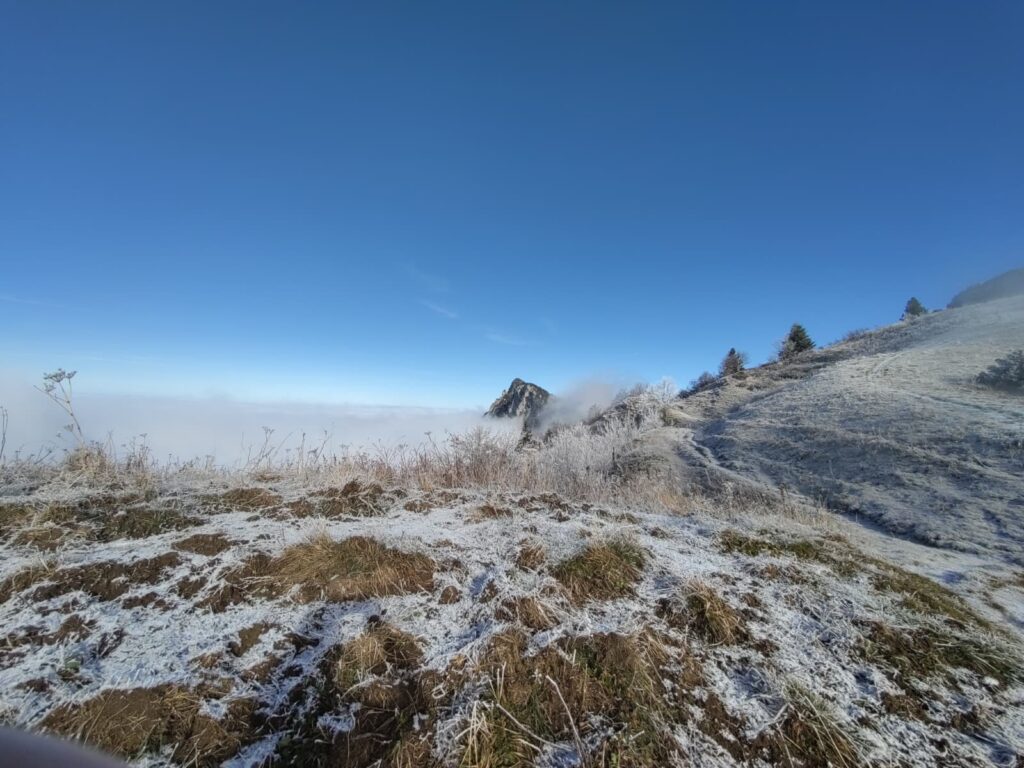
Continuing up we decide to aim for the summit. An unknown passage lays ahead, warnings of a technical step to be attacked with crampons and axes make us hesitate. But, for now we move one step at a time along the ridge.
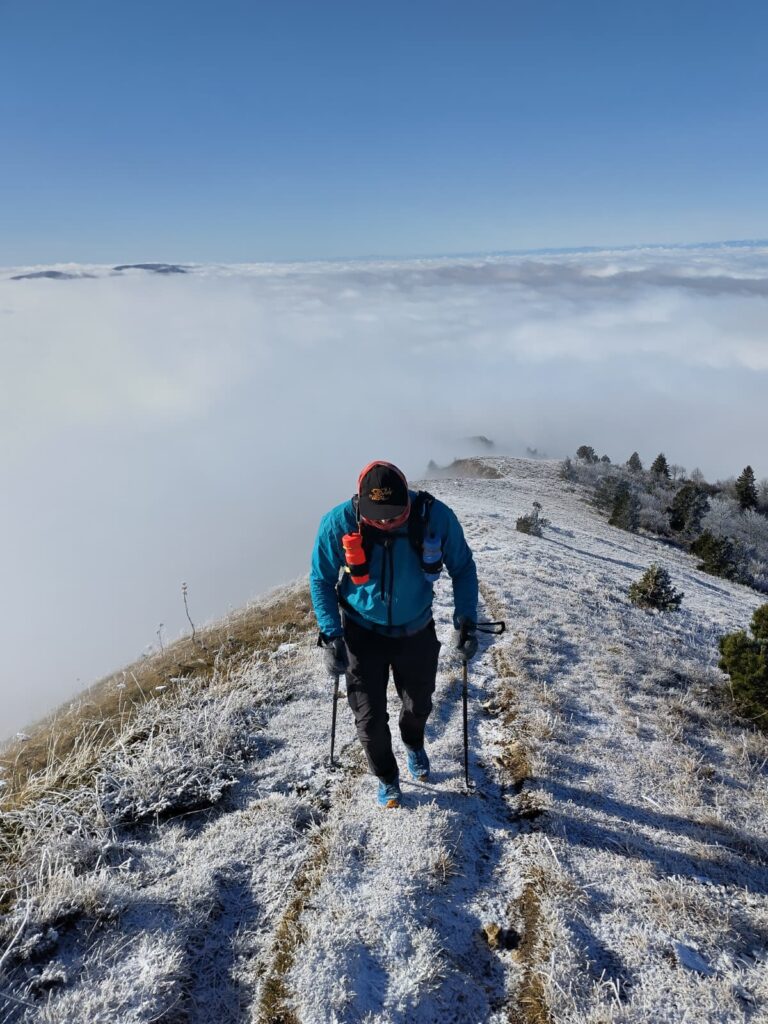
The strong north wind flows over our ridge and in the lee a depression is formed. The humid air cools and the water condenses to form a Banner cloud. The smooth flow turns turbulent when confronted with the mountain. We see it in the gentle looping of the wisps of condensation. The humid and cold air is further evidenced by the Rime ice formed on the windward sides of the trees and grass. This super-cooled liquid water comes into contact with its host and condenses to spray paint the mountain side a perfect white.
As we approach the difficulty the path forward becomes unclear. Looking ahead it seems impassible. But, the next step seems obvious. All I really have to do is the next step. Actually, that’s the only thing I can do. I can’t already start climbing the path ahead of me. I examine in the steps in front of me. They are there, but I can’t see around the corner. But, there is a path. Too big for just Chamois to have come through here. Sure, I can ponder what’s around the corner, but it won’t move me along the next step. Many people have finished their 20s before, and finishing a PhD is no unique path either.
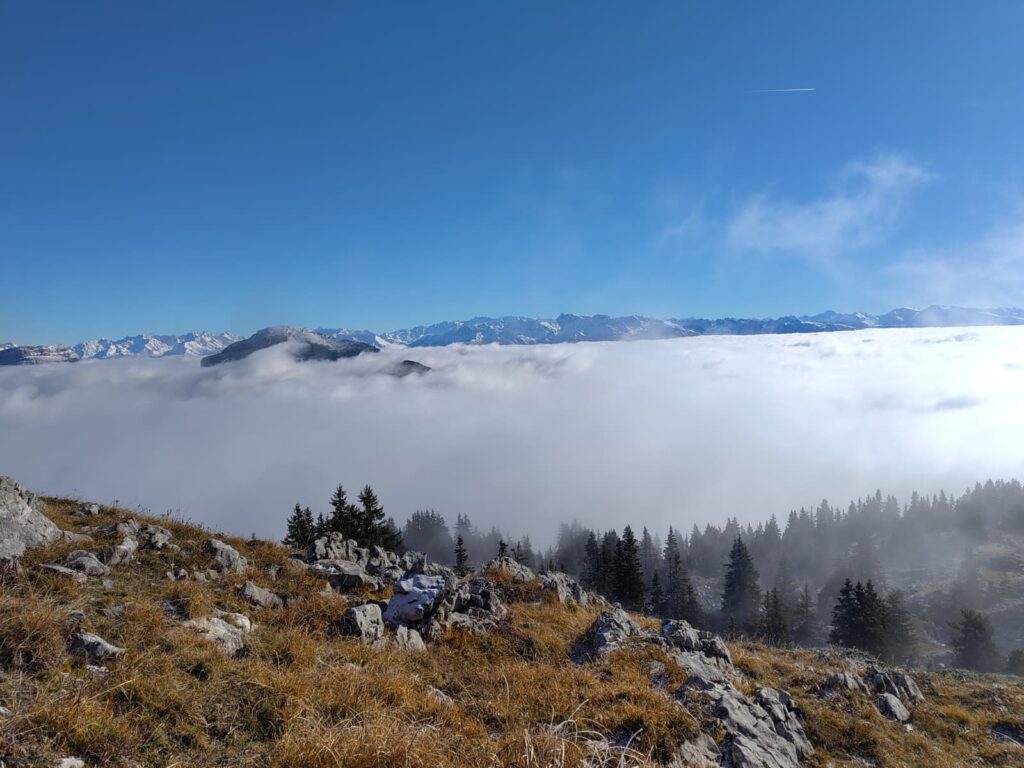
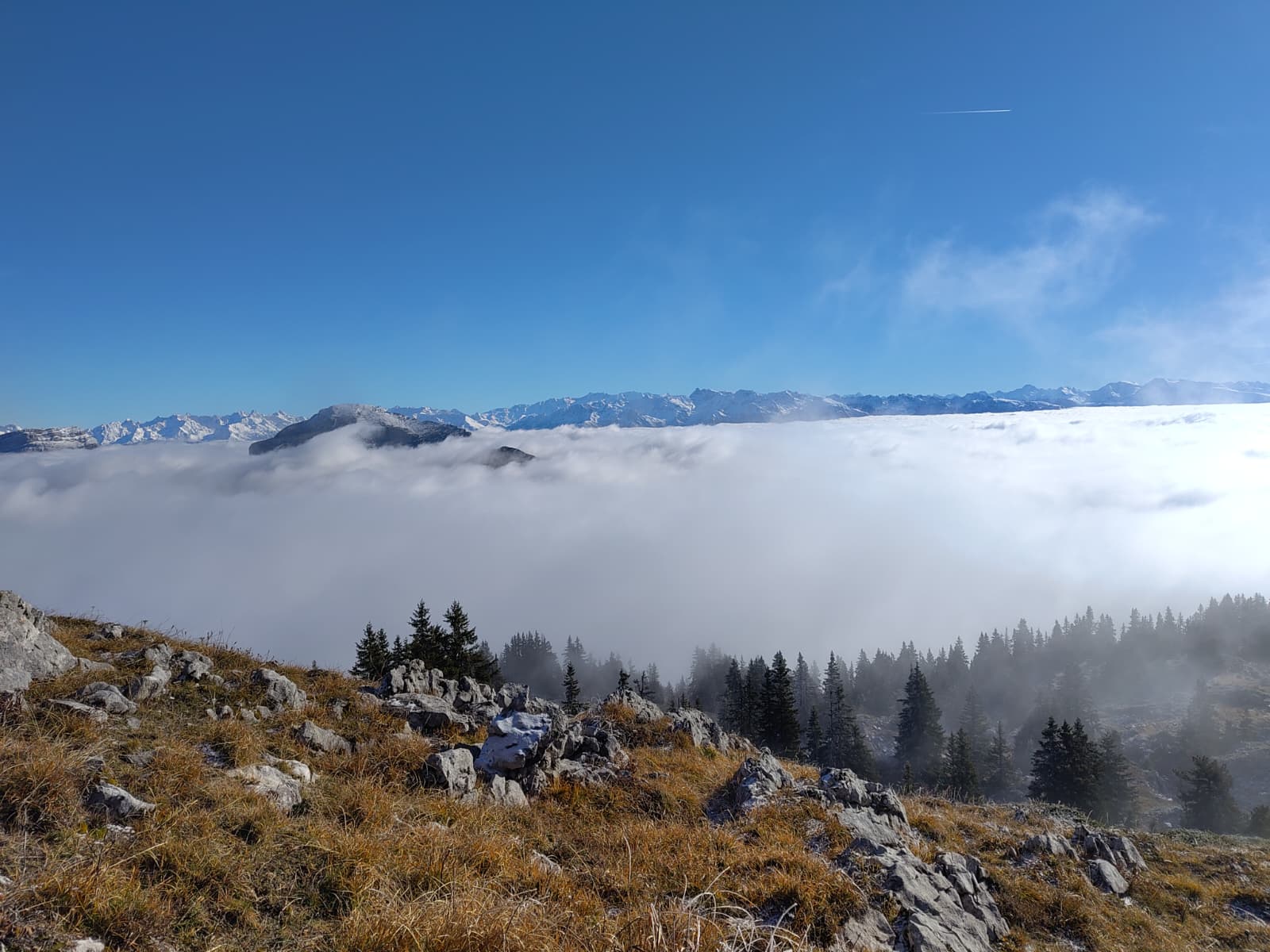
Before we know it we have passed the hard part and the crisp air rewards us with a perfect view stretching all the way to Mont Blanc. The difficulties and anxiety of the passage immediately forgotten. We nestle in below the summit for lunch sheltered by the random limestone extrusions. The cold North wind pushes the tides of clouds onto the mountain islands, while the shallow South sun tells us to remain still.